What is the FUE technique?
FUE (Follicular Unit Extraction) is the method of taking hair follicles one by one from areas that are more resistant to hair loss, such as the back and sides of the head, and moving them to the thinning area. The follicles are removed with a fine-tipped instrument without cutting a strip of skin. As a result, no long linear scar forms in the donor area; instead, very small dot-like marks remain where each follicle was taken.
In FUE, once the follicles have been extracted, channels are opened in the recipient area and the follicles are placed into these channels with fine forceps. The angle, direction and density of the channels are among the most important steps in determining how the transplanted hair will sit.
What does the sapphire tip change?
In classic FUE, the channels are mostly opened with steel tips. In Sapphire FUE, blades with sapphire tips are used. A sapphire tip can be made very fine and sharp, which means the channels can be opened small and even.
Claims that the sapphire tip speeds up healing or produces more hair are often heard, but strong comparative studies showing this are limited. The main factors that determine the result are opening the channels at the planned angle and density, protecting the follicles carefully and using the donor area correctly.
Sapphire FUE and classic FUE: the difference
| Topic | Sapphire FUE | Classic FUE |
|---|---|---|
| Extracting the follicles | One by one, with FUE | One by one, with FUE |
| Channel-opening tip | Sapphire-tipped blade | Mostly a steel tip |
| Placement | With forceps, into opened channels | With forceps, into opened channels |
| Recipient area | Usually cut short | Usually cut short |
Who may Sapphire FUE suit?
- People with a large thinning area that requires working with many follicles.
- People who accept having their hair cut short for the procedure.
- People whose donor area is dense enough.
For people who do not want to cut their hair short, or to add density between existing hair, DHI, an unshaven or a long hair transplant can be discussed. In some plans, Sapphire FUE and DHI are used together.
The day of the procedure and afterwards
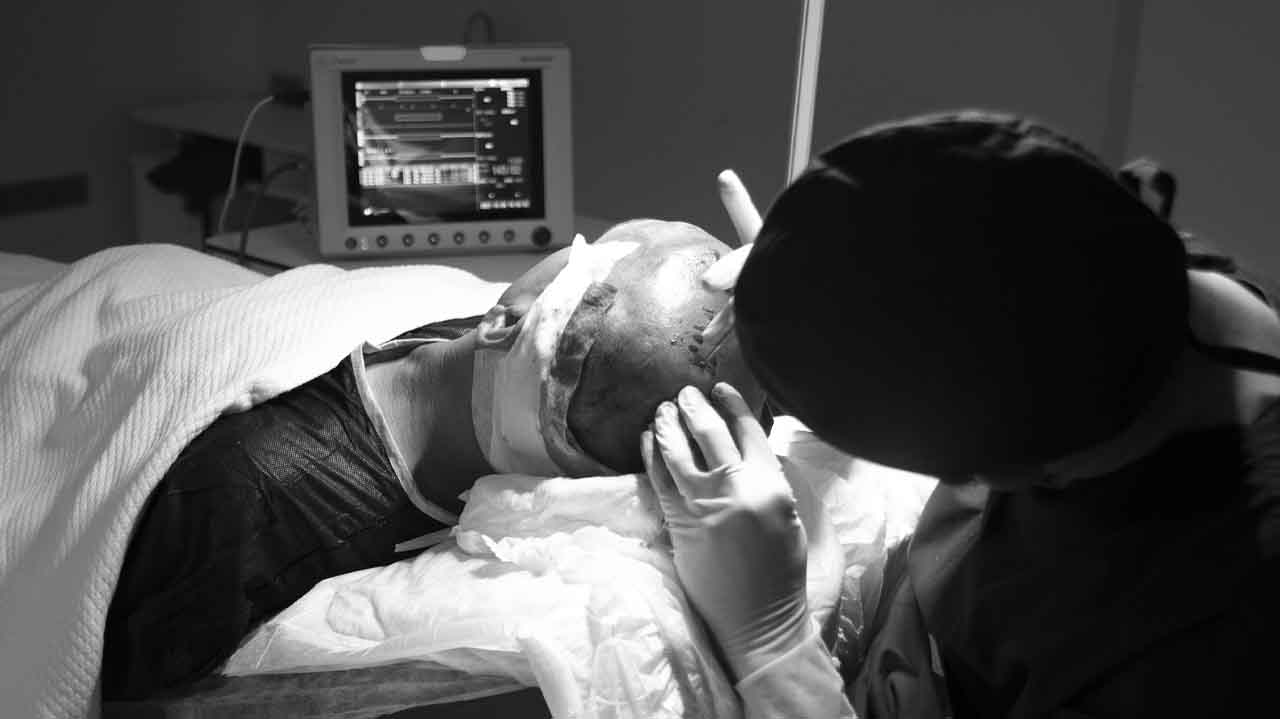
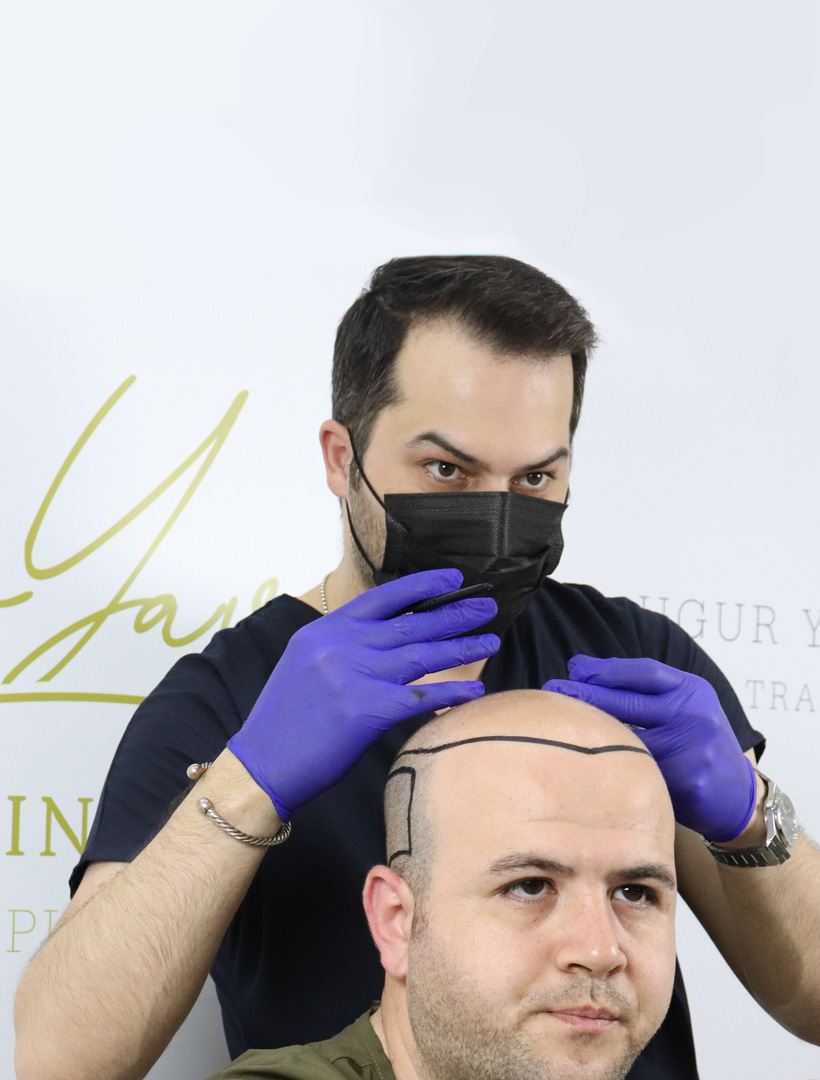
The hairline is drawn, local anaesthesia is given, and the follicles are extracted and sorted. The channels are then opened with the sapphire tip and the follicles are placed. Redness and scabs are expected in the first days; the scabs usually come off with washing within the first two weeks. Most of the implanted hairs shed in the first weeks, new hair starts to grow after a few months, and it mostly takes about a year before the result can be assessed.
Let's talk about the right method for you
Frequently asked questions
Are Sapphire FUE and a "sapphire hair transplant" the same thing?
Yes. The term "sapphire hair transplant" is used to describe the FUE procedure in which the channels are opened with a sapphire tip.
Does Sapphire FUE leave scars?
Very small marks remain at each point where a follicle was taken; these are usually not noticeable within the hair. They may be more visible if the donor area is cut very short.
DHI or Sapphire FUE?
Both use follicles extracted with FUE; the difference is in how they are placed. The choice depends on the size of the recipient area, whether you want to keep your hair long and your hair type. You can find the comparison on the techniques page.
This page provides general information. Suitability and the plan are determined during an examination; results vary from person to person.