What is the DHI technique?
DHI stands for "Direct Hair Implantation". The follicles (grafts), extracted one by one from the donor area, are loaded into an implanter pen with a fine hollow needle. The pen is held at the planned angle and direction over the recipient area, and the follicle is released into the skin with a plunger.
In classic FUE, all the channels are opened first and the follicles are then placed into them with forceps. In DHI, the pen can open the channel and place the follicle in the same movement, or it can be used to place follicles into channels opened in advance.
How is a DHI hair transplant performed?
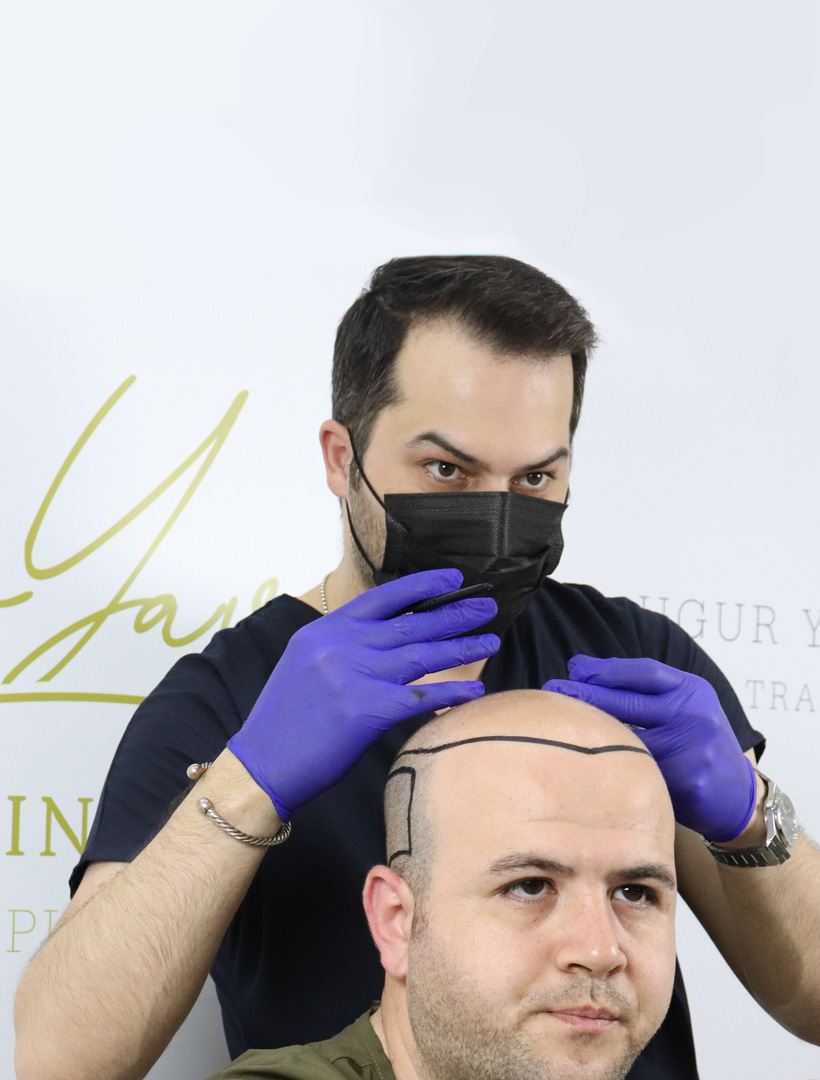
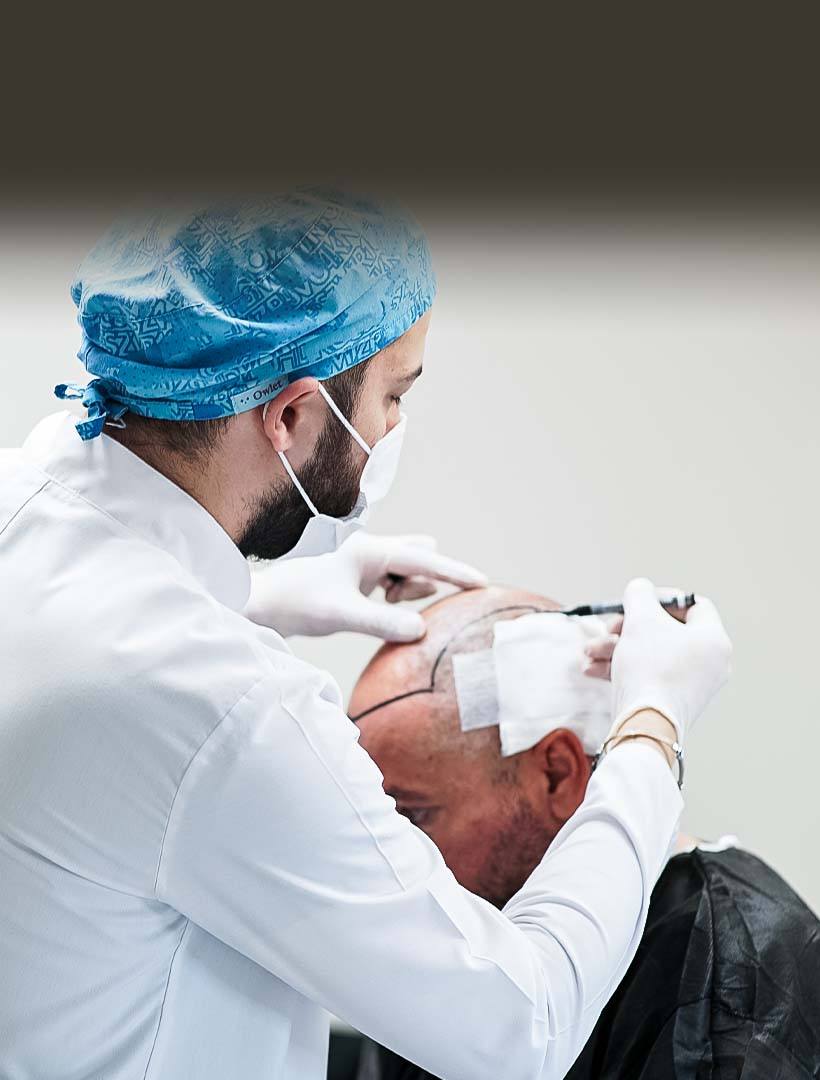
- Planning and drawing. The hairline and recipient area are decided together with you and drawn on the skin.
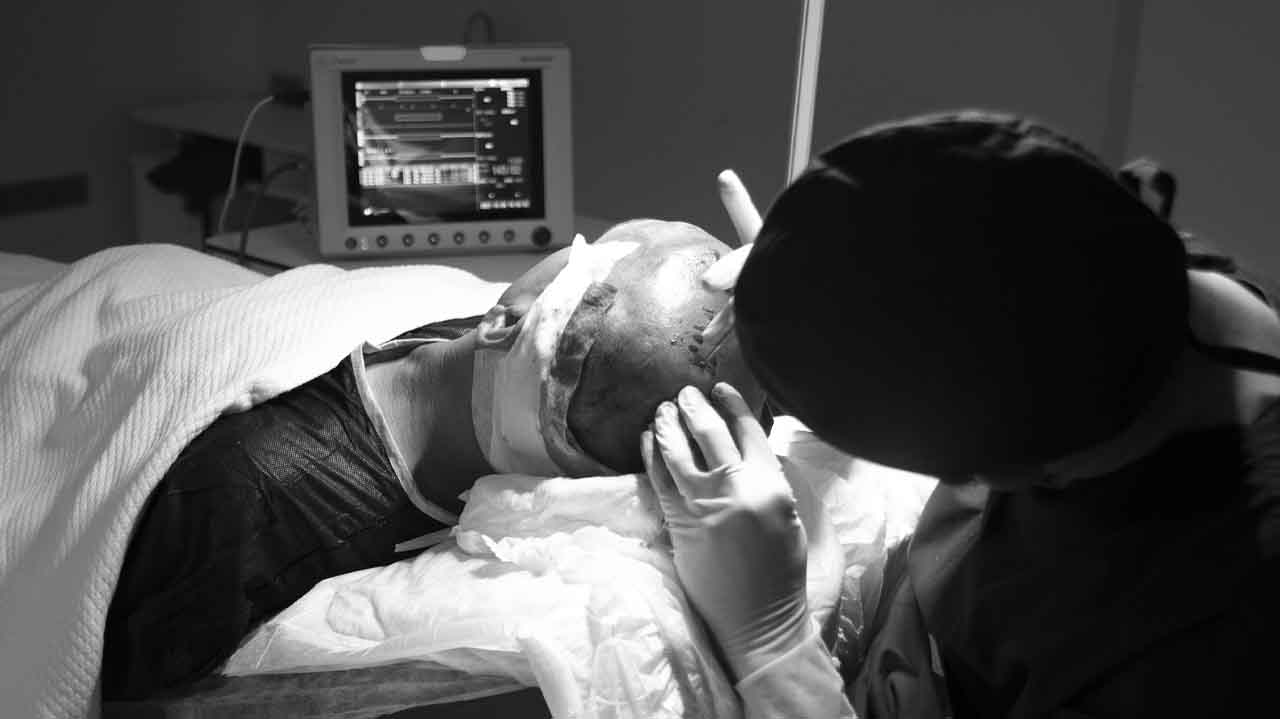
- Local anaesthesia. The donor and recipient areas are numbed.
- Extracting the follicles. The follicles are extracted one by one from the donor area with fine punches and sorted by how many hairs they carry.
- Placement. Each follicle is loaded into the implanter pen and placed at an angle that matches the natural direction of hair growth.
- Check and instructions. The area is checked, and instructions on washing, sleeping and the first days are given.
Who is DHI suitable for?
Because the pen makes it possible to work between existing hairs, DHI is often discussed in the following situations:
- For people who do not want to cut their hair short, in unshaven and long hair transplants.
- For people who want to add density to a thinning area between their existing hair.
- In areas such as the front hairline, where angle and direction are especially important.
If a large area is to be treated with many follicles, Sapphire FUE, in which the channels are opened in advance, may be more suitable; in some plans both techniques are used together. If the cause of the hair loss has not been investigated or the donor area is limited, other steps are discussed first.
DHI with long hair (Long DHI)
DHI can also be combined with a long hair transplant: the follicles are extracted with their long hairs and placed with the DHI pen. This is often called Long DHI. Because working with long hairs takes more time, the number of follicles per session is usually more limited, and the approach is mostly considered for limited, highly visible areas such as the front hairline.
DHI and FUE: the difference
| Step | DHI | Channel-opening FUE (including Sapphire FUE) |
|---|---|---|
| Extracting the follicles | One by one, with FUE | One by one, with FUE |
| Opening channels | The pen can open the channel and release the follicle in the same step | All channels are opened first |
| Placement | With an implanter pen | With fine forceps |
| Working between existing hairs | Usually easier | Possible; easier if the area is trimmed |
The technique alone does not mean the result will be "better"; a natural look depends on the design of the hairline, the angle and direction of the follicles and the correct use of the donor area. For a detailed comparison, see the hair transplant techniques page.
After the procedure
Redness, small scabs and, in some people, swelling on the forehead may occur in the first days. Most of the implanted hairs shed in the first weeks, while the follicle stays in place. New hair usually starts to grow after a few months; it mostly takes about a year before the result can be assessed. These timings are an average picture and do not work the same way for everyone.
Let's talk about whether DHI suits you
Frequently asked questions
Is the hair shaved for DHI?
The recipient area can often be worked on without shaving. Whether the donor area is trimmed is planned separately; in unshaven plans only hidden strips are trimmed.
Is DHI better than other methods?
Not on its own. Each placement method has situations it is well suited to. The right technique for you is decided after your recipient area and plan have been discussed.
How many hours does a DHI hair transplant take?
It depends on the number of follicles to be implanted and your hair type; most transplants take up most of the day. The estimated duration is given during planning.
This page provides general information. Suitability and the plan are determined during an examination; results vary from person to person.