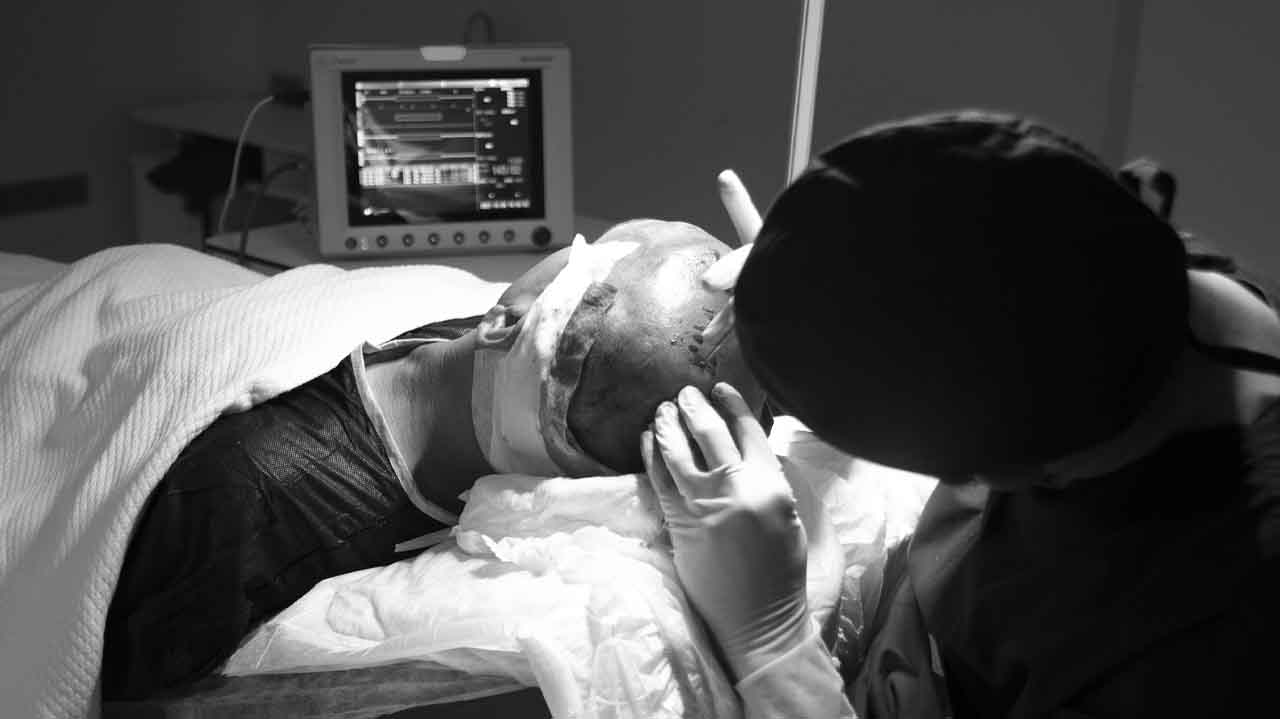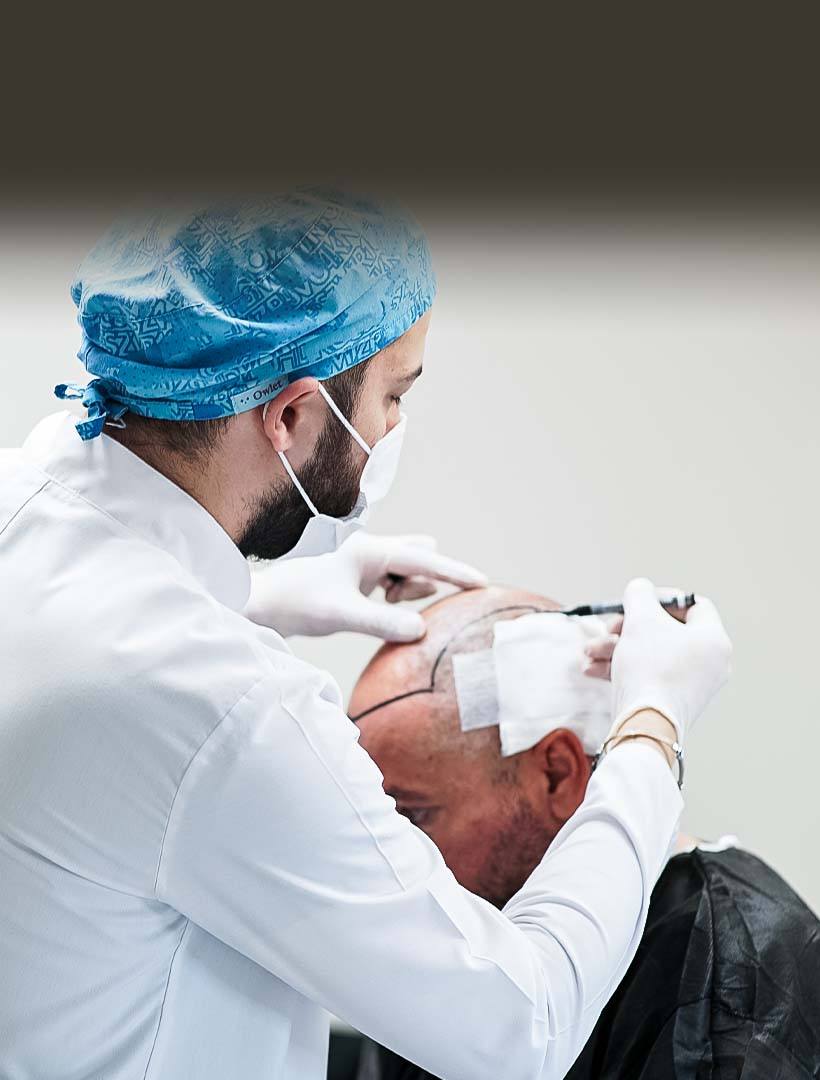
What is a long hair transplant?
In classic FUE, the hair in the donor area, and often in the recipient area too, is trimmed to a few millimetres so that the follicles can be extracted and placed easily. A long hair transplant (also called long hair FUE) skips this step: each follicle is extracted one by one together with its own hair and placed in the recipient area with that hair still attached.
This approach has two aims. First, because your hair length is preserved, the procedure is less noticeable to the people around you. Second, once the transplant is finished, you get a concrete idea of where the hairline sits, which direction the hairs grow in and how dense the result is planned to be.
What does the look on the day of the procedure show?
What you see on the day of the procedure are the implanted follicles' own long hairs. These hairs show how the plan has been carried out, but they do not show the long-term result of the transplant. Most of these hairs shed in the first weeks; the follicle stays in place and produces a new hair within a few months.
In short, a long hair transplant does not bring the result forward. What it gives you is the chance to spend the first weeks after the procedure without cutting your hair short, and to see the plan with your own eyes on the day of the procedure.
What can you see in the video?
- Follicles placed with their long hairs along the front hairline of a client whose hair has not been cut short.
- The hair in the donor area being parted along a thin line, and follicles being extracted one by one from this line without their hairs being cut.
- Extracted follicles lined up on a tray with their long hairs, waiting to be placed.
How it differs from an unshaven hair transplant
Although the two terms are often used interchangeably in everyday speech, they describe different procedures. In an unshaven transplant, the defining feature is that the hair in the recipient area is not shaved; in a long hair transplant, it is that the follicles are extracted and implanted with their long hairs.
| Topic | Long hair transplant | Unshaven hair transplant |
|---|---|---|
| Hairs on the extracted follicles | Left long; each follicle is extracted with its own hair. | Mostly short; follicles are taken from hidden strips trimmed in the donor area. |
| Hair in the recipient area | Not shaved. | Not shaved; new follicles are placed between the existing hairs. |
| When the procedure ends | The implanted long hairs give an early preview of the plan. | Because the new follicles are short, they are barely visible among the existing hair; a preview is not the aim. |
| Time and effort | Working with long hairs is the option that takes the most time and care. | Takes longer than a shaved transplant and usually less time than a long hair transplant. |
| Where it is mostly considered | Limited, highly visible areas such as the front hairline. | Limited areas and adding density between existing hairs. |
Which one suits you is decided by looking at the size of the thinning area, your donor area and your expectations together.
Long DHI: a long hair transplant with the DHI pen
In a long hair transplant, the long-haired grafts can be placed in two ways: with the implanter pen used in DHI, or into channels opened beforehand, as in Sapphire FUE. When the DHI pen is used, the procedure is often called Long DHI or a long hair DHI transplant. The term describes how the grafts are placed; the long hair approach itself, extracting and implanting each graft with its own long hair, stays the same.
Which placement method is used in your case is decided during planning, based on the area to be treated, the density aimed for and your hair type.
What it offers and where it has limits
What it offers
- Your hair is not cut short, so your appearance does not change completely after the procedure.
- The position, direction and density of the hairline can be seen on the day of the procedure, which makes it easier to discuss the plan.
- For people who wear their hair long, returning to daily life in the first weeks may attract less attention.
Its limits
- Working with long hairs takes time and care; the procedure lasts longer than a shaved transplant.
- The number of follicles that can be transferred in one session is usually more limited.
- Redness and scabs in the first days may also be noticeable between the long hairs; aftercare needs to be more careful during this period.
Is a long hair transplant right for you?
The answer depends on your hair, the follicles at the back of your head and your expectations; once we see your hair, we can talk clearly. The lists below give a general framework.
Who is it considered for?
- People whose thinning is limited to the front hairline, the temples or the crown.
- People who want to add density to a thinning area between their existing hair.
- People who do not want to cut their hair short because of their work or social life.
- People whose donor area is dense enough and whose hair type is suitable for working with long hairs.
- People who decide knowing that the implanted hairs will shed and the permanent result will appear over months.
When is a different plan needed?
- If the thinning area is large and a high number of follicles is needed.
- If the capacity of the donor area is limited.
- If the cause of the hair loss has not yet been investigated, or the hair loss is continuing rapidly.
- If there is a scalp problem that needs to be treated first.
- If very curly or easily tangled hair makes working with long hairs difficult.
- If the look on the day of the procedure is expected to be permanent.
In such cases, a different transplant plan or a treatment for the hair loss first is discussed.
How is the number of follicles planned?
How many follicles you need cannot be given as a single number. The plan is based on the size of the thinning area, the density of the donor area and how many follicles it may need to provide in the future, as well as the thickness and wave of the hair and the contrast between your hair colour and your skin.
Because the number of follicles that can be transferred in one session is more limited in a long hair transplant, priority is usually given to the front hairline that frames the face and to the most visible area. Since hair loss can spread to other areas with age, the plan is made not only for today's thinning but also with protecting the donor area in mind.
The first step to finding out whether you are suitable is a free hair analysis. You send photos taken from the front, top, both sides and back of your head via WhatsApp; after the preliminary assessment, we discuss whether a long hair transplant suits you and which technique could be considered. An analysis based on photos is a preliminary assessment; the final plan is confirmed in a face-to-face consultation.
If you live in Malta or Germany, you can also discuss a long hair transplant in person before travelling: see consultation in Malta and consultation in Augsburg, Germany. The procedure itself takes place in Istanbul.
The day of the procedure, step by step
Drawing and anaesthesia
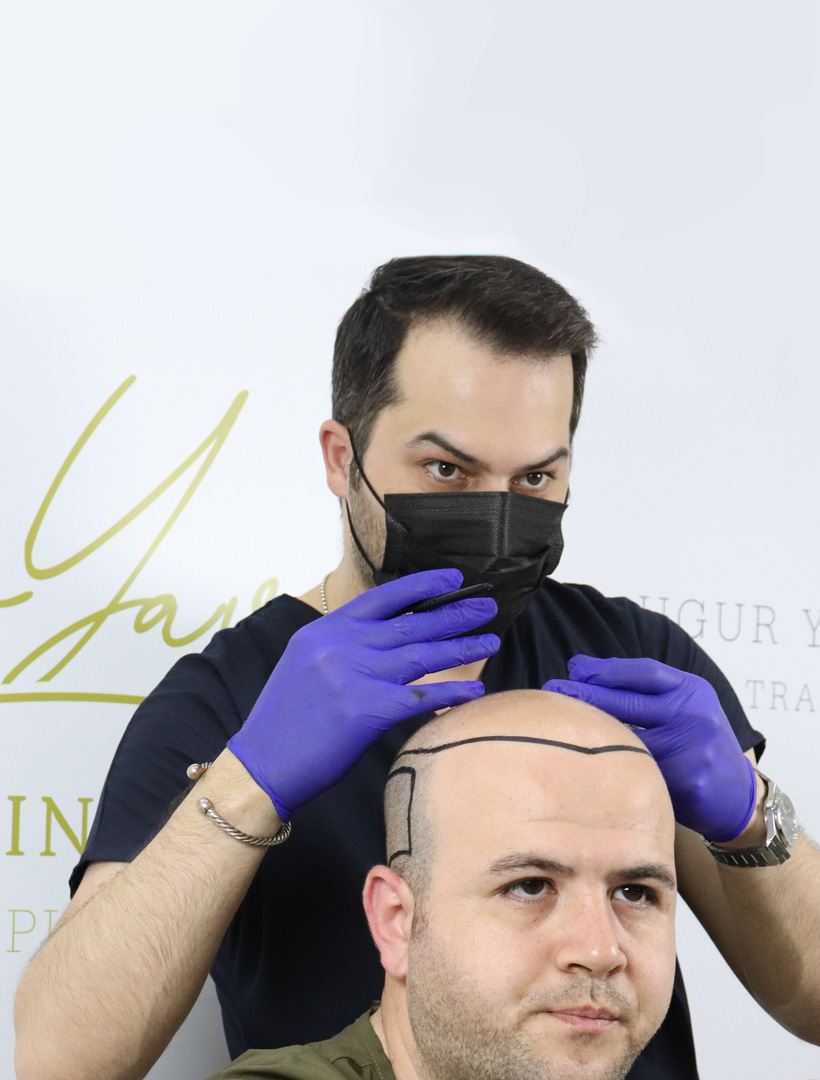
The recipient area and hairline are drawn on your skin according to the agreed plan, and the final version is reviewed with you. Local anaesthesia is then applied to the donor and recipient areas.
Extracting the follicles
The hair in the donor area is parted in thin lines; the follicles are extracted one by one with special punches, without cutting their hairs. The follicles are kept so that they do not tangle or dry out, and are sorted by how many hairs they carry.
Placement
The follicles are placed one by one with the method set out in the plan: with the implanter pen used in DHI, or into channels opened in advance, as in Sapphire FUE. The long hairs are laid in the natural direction of hair growth; the area is worked section by section so that they do not tangle.
At the end of the procedure
The recipient area is checked, and instructions on washing, sleeping and the first days are explained. Afterwards, you can send your questions via WhatsApp, phone or email.
After the procedure: stage by stage
The timings described are an average picture; they do not work the same way for everyone. The instructions given to you personally after the procedure always take priority.
The first days
Redness, small scabs and a feeling of tightness in the recipient area are to be expected; some people have swelling on the forehead that lasts a few days. The long hairs partly cover the recipient area but may not hide it completely. The transplanted area should not be scratched, rubbed or pressed with tight headwear.
Washing and caring for the long hairs
The day and method of the first wash are explained to you after the procedure. The long hairs in the recipient area should not be rubbed, combed or pulled with a towel. While sleeping, follow the recommended position so that the transplanted area does not rub against the pillow.
Shedding of the implanted hairs
Most of the implanted long hairs usually shed within the first weeks. The follicle stays in place and starts working again after a break of a few months. Temporary shedding (shock loss) may also occur in the existing hair around the area.
New hair growth
New hair usually starts to appear as fine hairs after a few months and thickens over the following months. It usually takes about a year before the result can be assessed; at the crown, this process may take longer.
How is the cost of a long hair transplant determined?
In a long hair transplant, the scope is determined by the size of the recipient area, the number of follicles needed and the time that working with long hairs requires. That is why no fixed price is given before a preliminary assessment. We recommend a method based on your hair type and needs, and we give you a personal price once the procedure you need is clear. The hair analysis and preliminary assessment are free of charge.
Start with a free hair analysis
Frequently asked questions
Do the implanted hairs fall out after a long hair transplant?
Mostly, yes. Most of the implanted long hairs shed in the first weeks, while the follicle remains in the skin. The permanent hair starts to grow from the same follicle after a break of a few months. That is why the look on the day of the procedure is a preview, not the result itself.
What is the difference between a long hair transplant and an unshaven transplant?
In both, the hair in the recipient area is not shaved; where they differ is whether the hairs on the extracted follicles are long or short. In a long hair transplant, the follicles are transferred with their long hairs and a preview can be seen on the day of the procedure. In an unshaven transplant, the follicles are mostly extracted with trimmed hairs and placed between the existing hair.
Can anyone have a long hair transplant?
No. It is mostly considered for limited areas and for adding density. If the thinning area is large, the donor area is limited or the cause of the hair loss is not yet known, a different plan may be more suitable. As a first step, we carry out a free preliminary assessment from your photos.
Does a long hair transplant take longer?
Usually, yes. Extracting, sorting and placing the follicles with their long hairs takes more time and care. The duration depends on the number of follicles to be implanted and your hair type; the estimated time is given to you during planning.
When can I return to work and social life after a long hair transplant?
This depends on the type of work you do and how your healing progresses. Because your hair is not cut short, your appearance changes less; however, the redness, scabs or swelling on the forehead in the first days may be noticeable up close. The right time for you to return is discussed during planning.
Can women have a long hair transplant?
It can be done when suitable. In women, hair loss often appears as general thinning of the hair rather than a specific bald area; causes such as hormones, iron deficiency or thyroid problems may play a role. That is why the cause of the loss is investigated first. For women who wear their hair long and have thinning in a limited area, a long hair transplant may be one of the options.
This page provides general information. Suitability and the plan are determined during an examination; results vary from person to person.