
1. The cause and speed of the hair loss
Not all hair loss can be solved with a transplant. Male pattern (genetic) hair loss and diffuse hair loss caused by stress, illness, iron deficiency or thyroid problems are very different. With diffuse and sudden hair loss, the cause must be found first; in this case the transplant is either postponed or not recommended at all.
You will also be asked when the hair loss started, whether there is similar hair loss in your family and how much it has accelerated in recent years. With hair loss that starts young and progresses quickly, the thinning that may develop in the future is included in the plan as well as today's.
2. The donor area
The follicles to be transplanted are mostly taken from the back and sides of the head. The hair density, hair thickness and number of hairs per follicle in this area determine how many follicles can be taken. The donor area is a limited resource; the calculation made here requires thinking about today's transplant and, if needed, a possible second procedure in the future at the same time.
3. The hairline and facial proportions
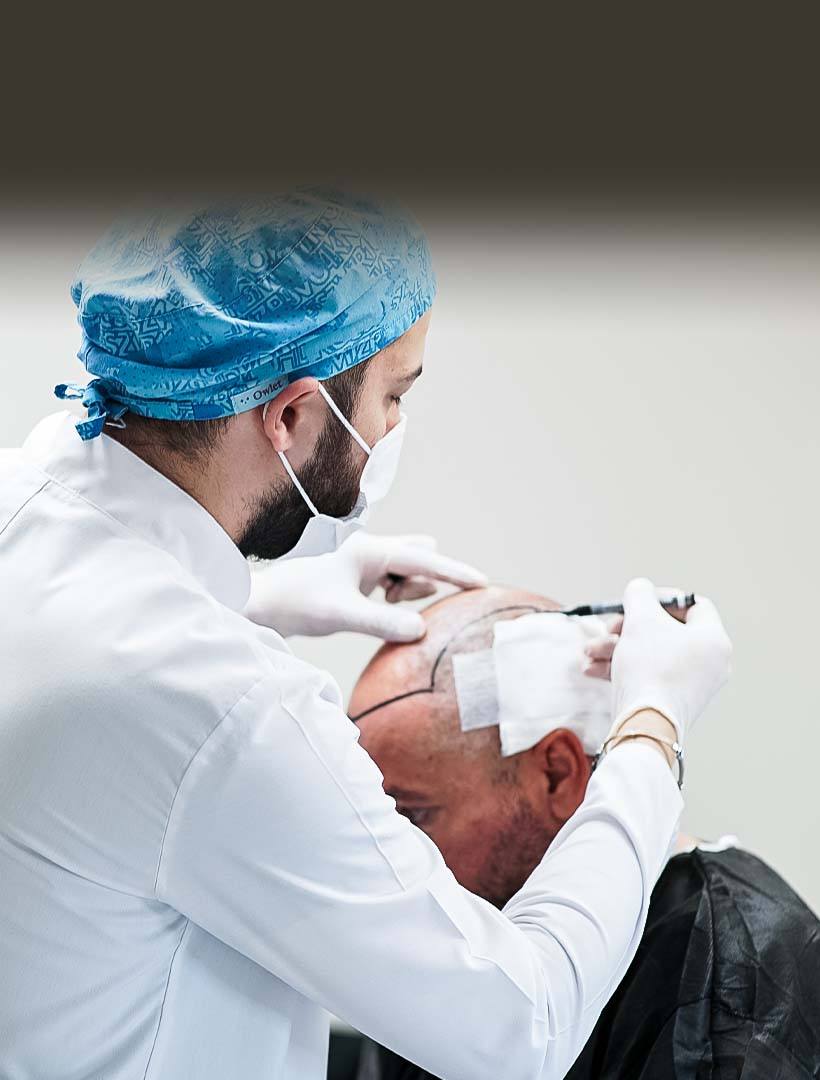
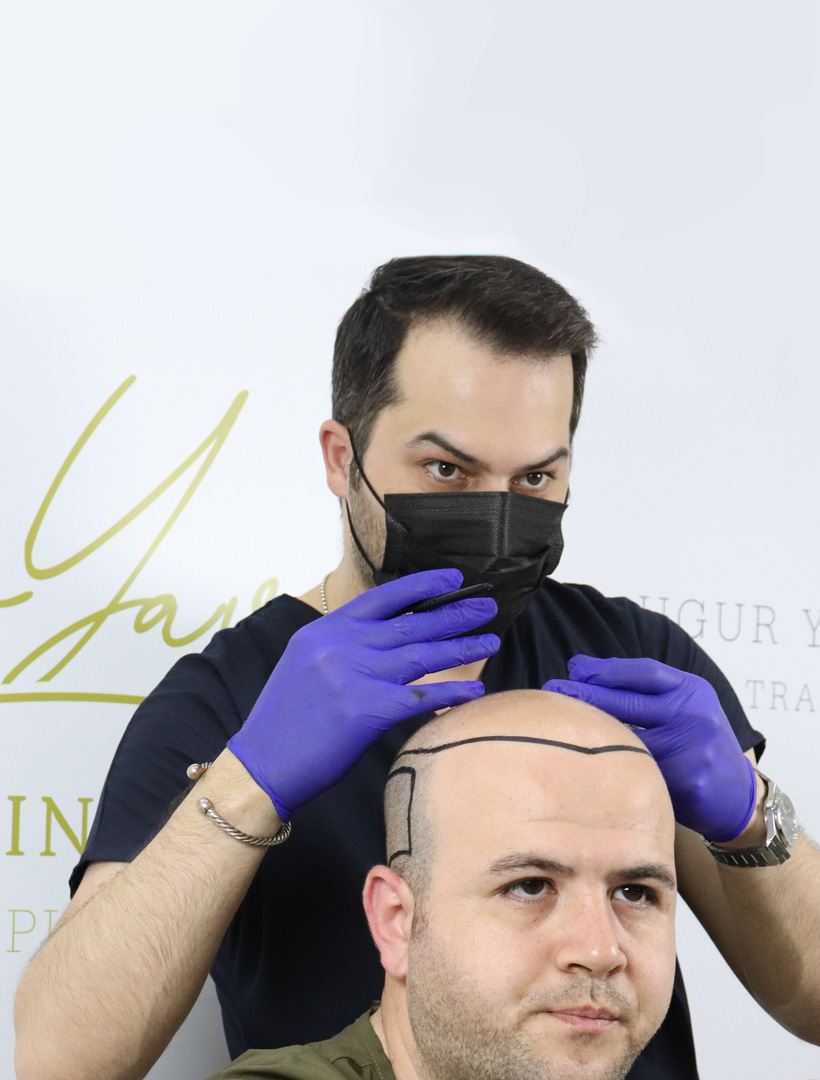
The hairline is drawn according to your age, your facial proportions and the shape of your forehead. A very low, straight line may look good today but may not look natural over the years as the hair behind it thins. That is why a good plan also takes into account how you will look ten years from now.
4. Hair thickness and hair type
Thick, wavy or curly hair can give a fuller look with fewer follicles; fine, straight hair may need more density. The colour contrast between hair and skin also affects visible density. These characteristics are why the same number of follicles can give different results in two people.
5. Health and medication
Chronic illnesses, the medicines you take (especially blood thinners), allergies, previous operations and smoking are asked about in the first consultation. In some cases, tests may be requested before the procedure. Do not stop taking a medicine on your own; what to do is decided together with the physician who prescribed it.
6. Your expectations
Saying clearly what you want is the foundation of a realistic plan. Do you want the front filled in, the crown covered, or a procedure without cutting your hair short? Some expectations may not be met in a single session; knowing this from the start is the most important condition for being happy with the result.
How many grafts do I need?
There is no figure that applies to everyone. The number of grafts follows from the points above: the size of the thinning area, the density aimed for, the thickness of your hair and, above all, how much your donor area can provide without being overharvested. Because the donor area is limited and hair loss can continue, part of its capacity is kept in reserve for the future.
Photos allow a first estimate; the number becomes clear once your hair and donor area have been examined in person, at the clinic in Istanbul or, if you live there, at a consultation in Malta or Augsburg, Germany.
How to prepare for the consultation
- Prepare clear photos of your hair from the front, top, both sides and back, taken in good light.
- Old photos, if you have any, help show how your hair loss has progressed.
- Make a list of the medicines you take and the hair treatments you have tried before.
- Note down your questions: why is this method recommended, how many follicles are planned, how will healing go, when are the check-ups?
A preliminary assessment from photos gives a first idea; the final plan is confirmed in a face-to-face consultation.
Frequently asked questions
Can the graft count be confirmed from photos?
Photos help give an approximate range. The density of the donor area and the hair structure can be assessed more accurately in person.
Could treatment be recommended first instead of a transplant?
Yes. If the hair loss is fast or its cause is unclear, protective treatments and follow-up may be discussed first. Supportive treatments such as PRP and hair mesotherapy can also be part of this plan.
This article provides general information and is not a treatment recommendation. Suitability is determined during an examination; results vary from person to person.